The next chapter of human spaceflight is about to take off from Florida’s Space Coast—and it’s one you can experience right here in Cocoa Beach.
Artemis II is NASA’s first crewed mission to travel toward the Moon in more than 50 years. Launching from Kennedy Space Center, this mission is more than a test flight—it’s the step that sets up humanity’s return to the lunar surface.
What Artemis II Is (And What It Isn’t)
Artemis II is not a landing mission.
Instead, it’s a crewed lunar flyby designed to test every critical system with humans onboard.
After the success of Artemis I, which flew uncrewed, this mission puts astronauts inside the spacecraft to validate:
- Life support systems in deep space
- Navigation and communication far beyond Earth orbit
- Manual and automated flight controls
- Safe high-speed reentry into Earth’s atmosphere
The mission will last about 10 days, carrying the crew farther from Earth than any humans have traveled since Apollo.
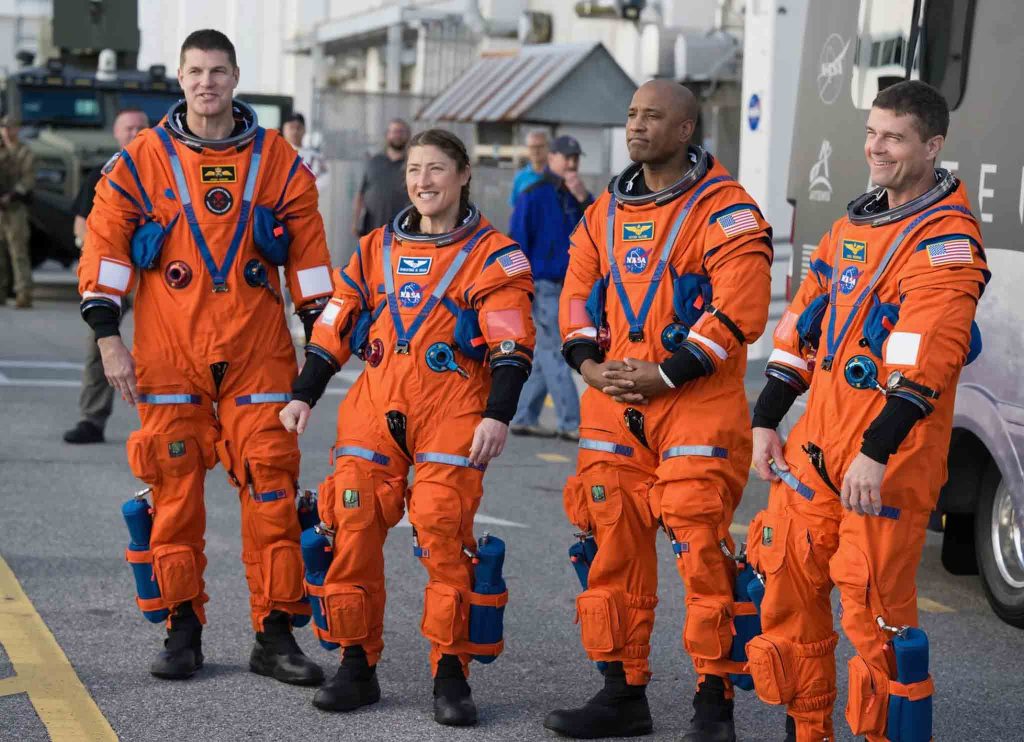
Meet the Artemis II Crew
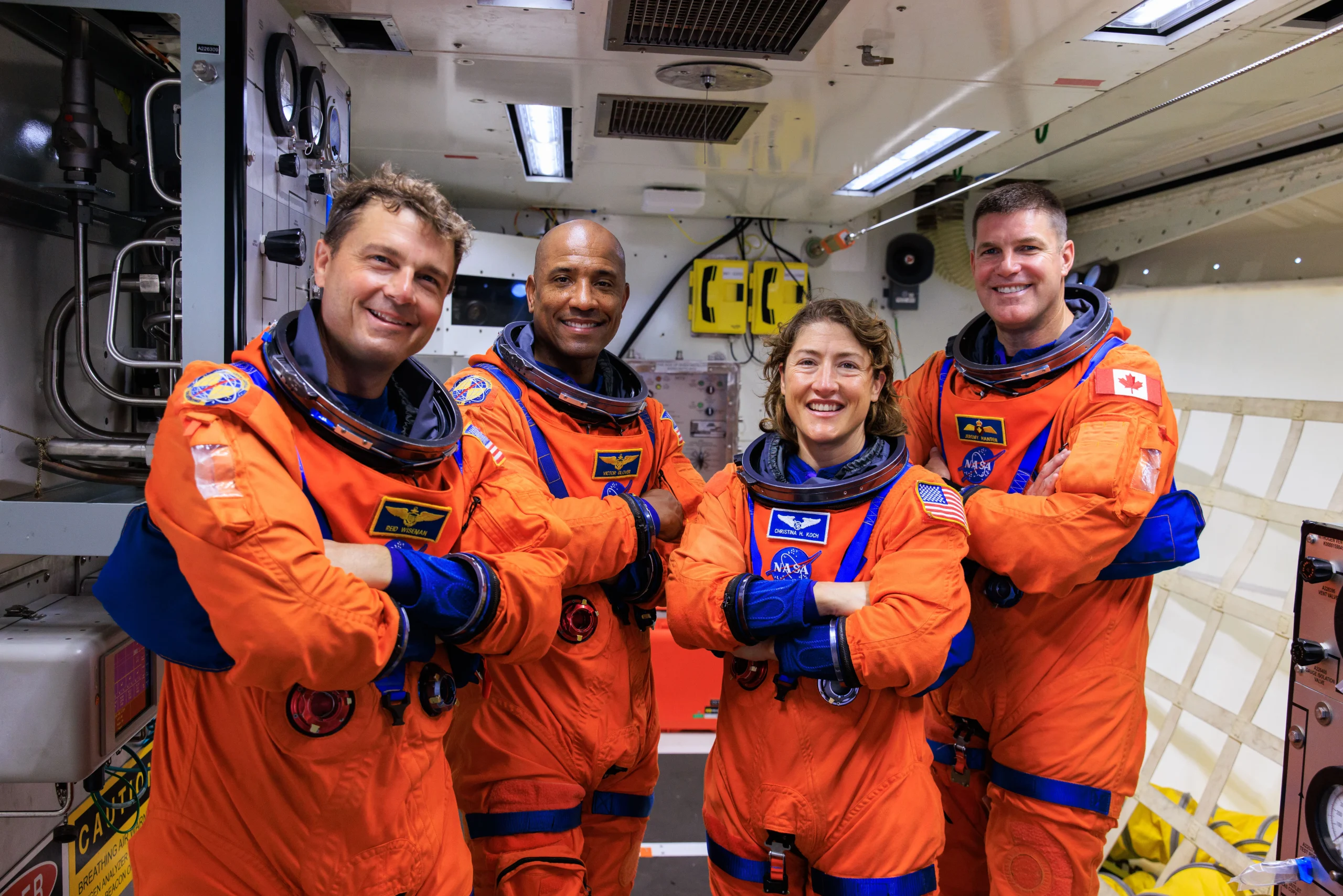
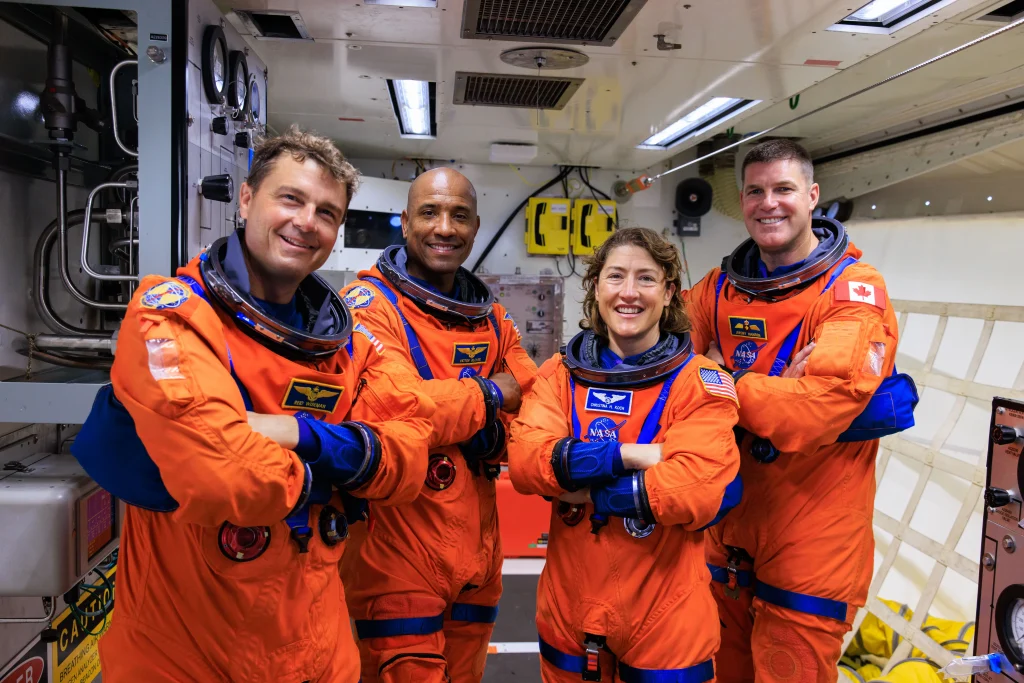
NASA selected a four-person crew that represents both experience and a new era of space exploration:
- Reid Wiseman – Commander
- Victor Glover – Pilot
- Christina Koch – Mission Specialist
- Jeremy Hansen – Mission Specialist
This mission marks several important milestones. It will include the first woman, the first Black astronaut, and the first Canadian to travel into deep space beyond low Earth orbit.
The Mission: A Precise Loop Around the Moon
Rather than entering lunar orbit, Artemis II will follow what’s called a free-return trajectory.
This is a carefully calculated flight path that:
- Sends the spacecraft around the Moon
- Uses the Moon’s gravity to redirect it back toward Earth
- Minimizes the need for major engine burns during the return trip
At its farthest point, the crew will travel roughly 250,000 miles from Earth, giving them a direct view of the Moon’s far side before heading home.
The Technology Behind the Mission
Artemis II is powered by some of the most advanced systems NASA has ever built.
Space Launch System (SLS)
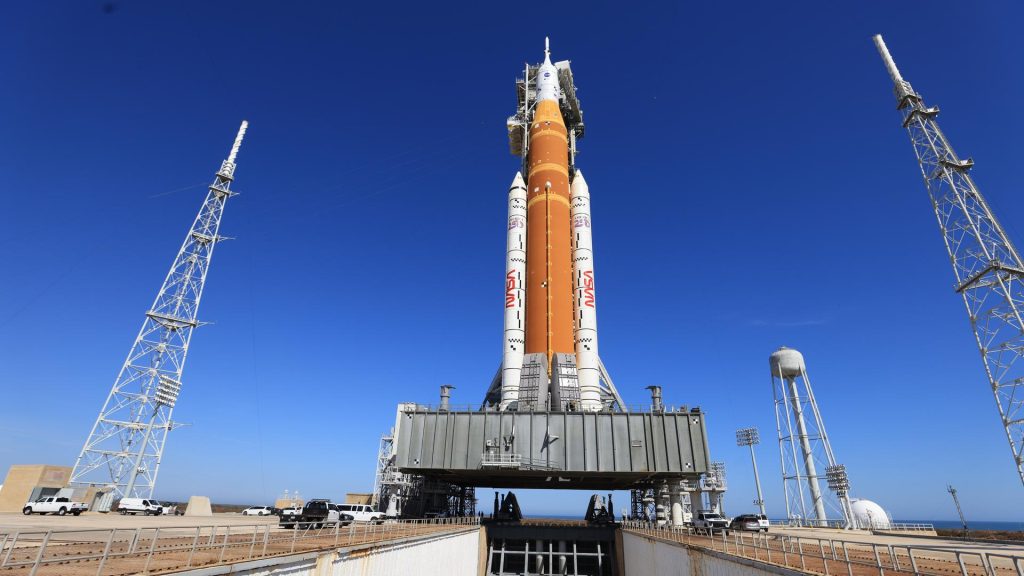
The rocket launching Artemis II is the Space Launch System, one of the most powerful rockets ever developed. It produces more thrust than the Saturn V rockets used during Apollo.
Orion Spacecraft
The crew will travel aboard Orion, designed specifically for deep space missions. It includes:
- Advanced life support systems
- Radiation protection for long-duration spaceflight
- Modern navigation and control interfaces
Extreme Reentry Conditions
When the mission returns to Earth, Orion will reenter the atmosphere at speeds approaching 25,000 miles per hour.
Its heat shield is engineered to withstand temperatures of nearly 5,000°F, making this one of the most critical phases of the mission.
Why Artemis II Matters
Artemis II is the bridge between testing and actually returning humans to the Moon.
- Artemis I proved the hardware works
- Artemis II proves humans can safely travel in it
- Artemis III aims to land astronauts on the Moon again
NASA’s long-term goal goes beyond short visits. The Artemis program is focused on building a sustained presence on the Moon, particularly near the south pole, and eventually preparing for missions to Mars.
Watching the Launch from Cocoa Beach
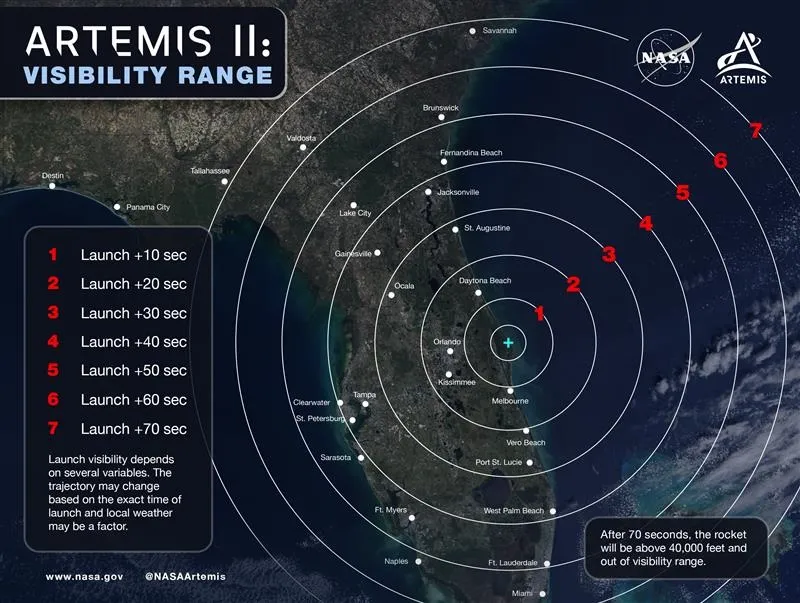
One of the biggest advantages of being in Cocoa Beach is proximity. With the launch happening just up the coast at Kennedy Space Center, this area offers some of the best public viewing locations anywhere.
From the beach, you can expect:
- A clear view of the rocket as it climbs into the sky
- The glow of the engines lighting up the coastline
- A delayed but powerful rumble as the sound reaches shore
For the best experience:
- Arrive early to secure a spot
- Face north toward Cape Canaveral
- Be ready for changing launch windows depending on conditions
A Moment Worth Seeing in Person
Artemis II isn’t just another launch—it’s the first time in decades that humans will head back toward the Moon.
From Cocoa Beach, you’re not watching history on a screen.
You’re standing right next to it as it happens.
And moments like that don’t come around often.